
Self-Leveling Concrete & Overlays in Lawrence IN - a flat base for your new floor
Dips, humps and uneven concrete can make new flooring rock, crack or gap. We pour a level layer so tile, plank or carpet lies flat.
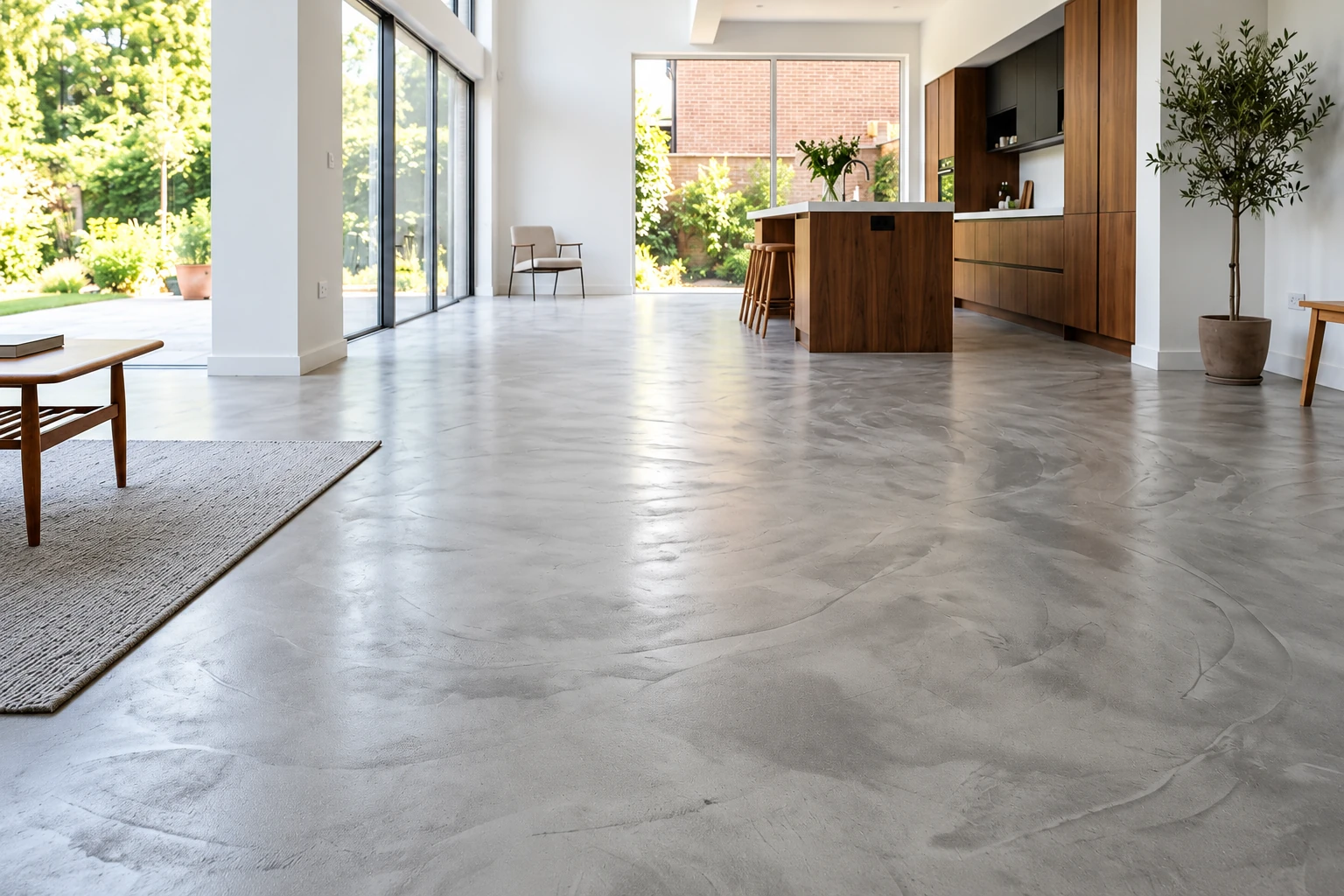
- Licensed and insured.
- Free on-site estimates.
- Expect a reply within 1 business day.
Do I need self-leveling concrete before my new floor goes down?
Self-leveling concrete, often called a self-leveling overlay or underlayment, is a poured layer we lay over the existing slab in your Lawrence, IN home after the slab is prepped and before the new floor covering goes in, so your tile, plank or carpet sits on a flat, even surface.
Most people call us after they've pulled up old carpet or vinyl in a basement or ground-floor room and found concrete that dips, humps or carries an old patch, and the flooring they've picked needs something flatter. The price mostly turns on the size of the room, how far out of level the slab sits and what has to come off first, which is where our concrete grinding and surface preparation work comes in, along with any moisture work the slab needs. The schedule turns on the same things, because we test the slab before we pour and old glue may need checking before anyone touches it. When I come out, I check the concrete and write up what we'd do and why, so you see what you're paying for before you say yes.
How do you know your concrete floor needs leveling?
Dips you can feel
If a straightedge rocks on the concrete or you feel the floor drop near a wall or a drain, the slab usually settled or was poured uneven. New tile and plank laid over that tend to crack, flex or open at the seams, and redoing a finished floor costs far more than fixing the base first.
Old patches and ridges
Raised patches, ridges left by the finishing trowel or a step where two pours meet usually mean earlier repairs or a rough first finish. They show through thin flooring and vinyl, so leaving them means looking at every bump once the new floor is down.
Cracks across the slab
A crack can be old and stable, or it can still be moving with the seasons, and the moving kind isn't something a level layer cures. One maker's guide says active cracks and joints carry up through the underlayment and the floor on top, so I'll tell you straight if that's what you've got before you spend money on a pour.
How we pour self-leveling concrete and overlays indoors
We only pour self-leveling layers indoors, which lines up with one maker's guide that says its underlayments are for interior floors only. We test the slab for moisture before anything else, because these products don't stop moisture coming up through the concrete, and if there's old glue on the floor, we have it checked for asbestos before anything gets ground off. Once we know the slab is ready, our crew grinds and preps it, primes it and pours the layer so it flows out flat across the room. After it cures, your new flooring goes down on a surface that's level enough for it to sit right.
A lot of these jobs start with something old coming up, and our concrete floor stripping and removal work takes off worn coatings, paint and glue once we know it's safe to grind. If what's bothering you is the deck around a pool, that's its own job, so look at our pool deck coatings and resurfacing page or just give us a call.
Whole-room underlayment
This suits a room where the whole slab rolls, slopes or has old patches, because a full pour gives the new floor one even surface wall to wall. It's the usual choice under tile or long planks, since those show every high and low spot.
Leveling low spots only
When most of the floor is fine and a few dips or a seam between two pours are the problem, we level just those areas. It takes less material, but it only works if the rest of the slab is already flat enough for your flooring.
Get a free on-site estimate for your self-leveling job
Send the room, whether it sits at or below ground level, what's on the floor now and any old glue. We'll reply within one business day, I'll come look at the slab, and there's no pressure to book.
(317) 463-6468- Based in
- Lawrence, IN 46226
- Hours
- Mon–Fri: 8 AM–10 PM, Sat–Sun: 6 AM–9 PM
What happens after you call about self-leveling in Lawrence?
Here's how a self-leveling job runs from your first call to the final walk-through, and who you'll deal with at each step.
Call or send a request
Call (317) 463-6468 or send a request, and we'll get back to you to set a time for me to look at the floor. If you already know what flooring is going on top, have its name handy.
I check the slab myself
I look at the floor, check the concrete for moisture and old coatings, and talk through what fits how you use the room. You get a written estimate that lays out the prep, the pour and why each step is there, so you know what you're paying for before you say yes.
We prep the slab and pour
Once you're ready, our crew preps the slab and pours the layer, and I check the work along the way. One maker's guide calls for keeping the slab and room between 50°F and 95°F before the pour and for at least 72 hours after, with doors and windows shut, heating and cooling off until it cures and direct sun shaded, so we'll plan the house around that with you ahead of time.
We walk the floor together
When the layer is done, we walk it with you so you can see and feel the surface before your new flooring goes on. Any question you have gets answered right there.
Why Lawrence homeowners call Lawrence Epoxy Floors and Concrete for self-leveling work
The owner writes your estimate
I come out to look at the floor and write the estimate myself, and our own crew does the prep and the pour while I check the work along the way. The person who told you the plan is the one watching it happen on your slab.
Slab prep comes first here
I learned this trade running prep crews and sorting out floors that didn't hold, and we've been in business since 2017. Nearly every failed floor I've seen came back to the concrete underneath, so that's where we spend our time on your job.
Licensed and insured for Lawrence
We're licensed and insured. Indianapolis licenses contractors inside its consolidated city, which doesn't include Lawrence, so it's fair to ask anyone you hire here how they're covered, and I'm glad to answer that before we start.
The next step is a look at your slab, so call (317) 463-6468 or send us a request.
Self-leveling, permits and floor prep in Lawrence
We're based in Lawrence and work across the cities around it. Here, permit applications go to the city's Department of Public Works, where staff review them and process them for issuance. Whether a self-leveling pour needs a permit isn't something I'll guess at, so when a job needs one we file it with that office and tell you where it stands, and when it's unclear, we check with them before we start. The city's application asks for the contractor's information and fills in the names of contractors registered with the city, so that part sits with us.
Most of what we level is basement and ground-floor concrete that had carpet, vinyl or tile glued to it, and we see the same kind of floors on jobs in Fishers and Carmel. That's why the moisture test and a look at the old glue come before any talk of the pour.
Questions about self-leveling concrete in Lawrence
Can a self-leveling layer go on my basement floor in Lawrence?
Often it can, once the moisture question is answered, because some self-leveling products aren't suited to slabs at or below ground level since moisture comes up through them. Industry practice says most can work on those floors when there's a vapor barrier right under the slab or a moisture system goes down under the layer. Testing is how we find out which situation your basement is in.
Why do you test the concrete for moisture before pouring self-leveler?
Because self-leveling layers don't stop moisture, and one maker says to test the slab to the flooring maker's specifications before the pour for that reason. Too much moisture under a finished floor can make it lose its grip on the slab, push up into peaks or grow mold underneath. A test costs far less than pulling up a floor that let go.
How long does moisture testing a concrete slab take?
The standard in-slab humidity test needs each sensor to sit in the concrete for 24 hours before a reading can be recorded, so plan on at least a day between setting the test and getting an answer. That wait is part of why the pour doesn't happen the same day I first see the floor.
Is old floor glue under carpet or tile a hazard?
It can be, because old adhesive residue may contain asbestos, and grinding or scraping it off is what turns it into a hazard. One maker advises checking with the adhesive maker and the proper government agencies before removing cutback adhesive, the old black glue, if it contains asbestos. If you've found dark glue under your old flooring, mention it when you call.
Who processes building permits in Lawrence, Indiana?
Staff at the city's Department of Public Works review permit applications and process them for issuance. If your floor job needs one, we file it with that office and keep you posted on where it stands.
How much does self-leveling concrete cost in Lawrence, IN?
There's no single price, because it comes down to the size of the room, how far out of level the slab is and how much prep it needs first. Old glue that needs testing and removal, or a slab that needs moisture work before the pour, adds to the job, while a clean, dry slab with a few low spots costs less. I'll give you a written number once I've seen and checked your floor.
Related concrete services from our Lawrence crew
Concrete Floor Stripping & Removal
When old glue, paint or a worn coating still covers the slab, this clears it so the new layer has clean concrete to grip.
Pool Deck Coatings & Resurfacing
If the concrete that's bothering you is the deck around your pool, this is the page to read, and I'm glad to come out and see it.
Service areas around Lawrence, Indiana
Lawrence Epoxy Floors and Concrete is based in Lawrence, Indiana, and the 12 cities listed here, including Greenfield and Cumberland, each have their own page. They aren't the only places we work, so if you don't see your city, just ask.
Lawrence, IN
Get your slab checked before you pour
Calling before your new flooring arrives leaves time for the testing and prep, so your boxes aren't stacked in the garage waiting on the concrete.